Who Can Make the Coffee?
Who Can Make the Coffee?
More training for producers will not solve the problem if there are no jobs for them afterwards. This was one of the central points raised by Sigrid Aakvik, Creative Producer at Art & About, at Performing Arts Centre Iceland’s Industry Day on 11 September. The event explored producers’ working conditions, collaboration with artists, and ways to help performing arts productions reach more audiences and enjoy longer lives.
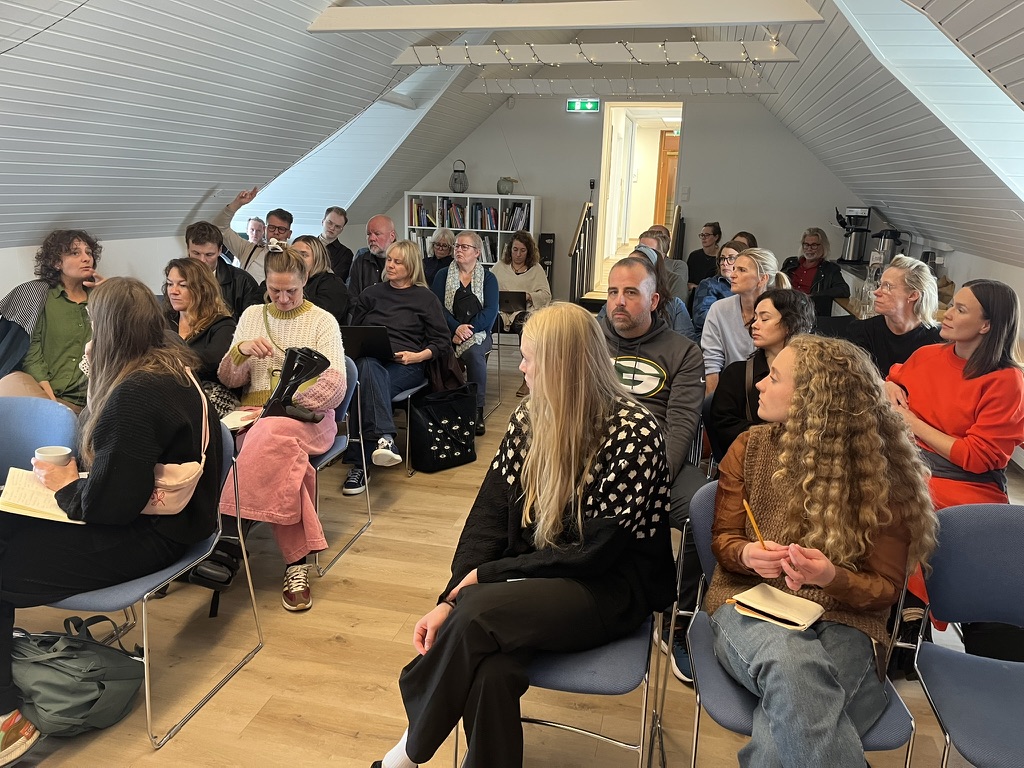
Industry Day took place at the Centre’s premises at Austurstræti 5, Reykjavík, under the title Who Can Make the Coffee? The programme explored the many responsibilities and expectations placed on producers, from fundraising and planning to artistic development and touring.
Producers Need Places to Work
In her keynote, Who produces the producer?, Sigrid Aakvik asked why the independent performing arts sector continues to report a shortage of producers, despite years of demand for their expertise.
“I think we risk treating an economic and structural problem as a competence problem,” she said.
Training, mentoring and professional development were valuable, but developing people’s skills was not enough if they had nowhere to put them into practice and continue learning.
“Maybe what we lack is primarily not people who want to be a producer. Maybe we lack places where producers can work.”
— Sigrid Aakvik
Sigrid pointed out that a producer within a large institution has colleagues working in finance, technical production, communications and other departments. In the independent sector, one person may have to coordinate almost all of these functions.
She described her experience of employing young producers at Art & About and giving them responsibility for real projects, supported by more experienced colleagues. This had benefited both the producers and the artists they worked with. Funding such a working environment, however, remained an unresolved challenge.
“Professional development can make a producer better. It cannot by itself create a labour market.”
Sigrid argued that artists’ limited project budgets could not also be expected to fund producer training, sustain workplaces and preserve professional knowledge between projects.
Clear Responsibilities Build Trust
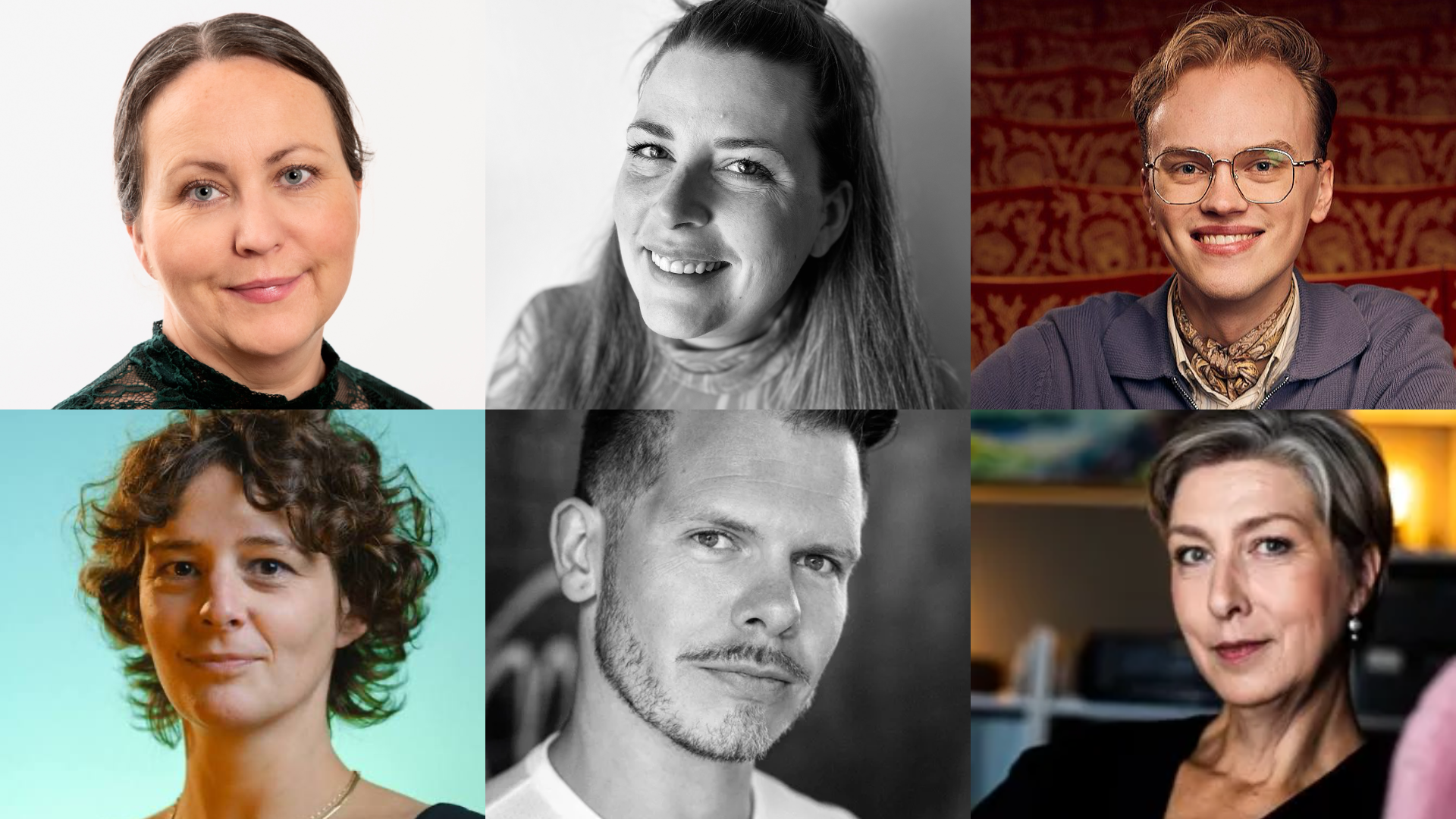
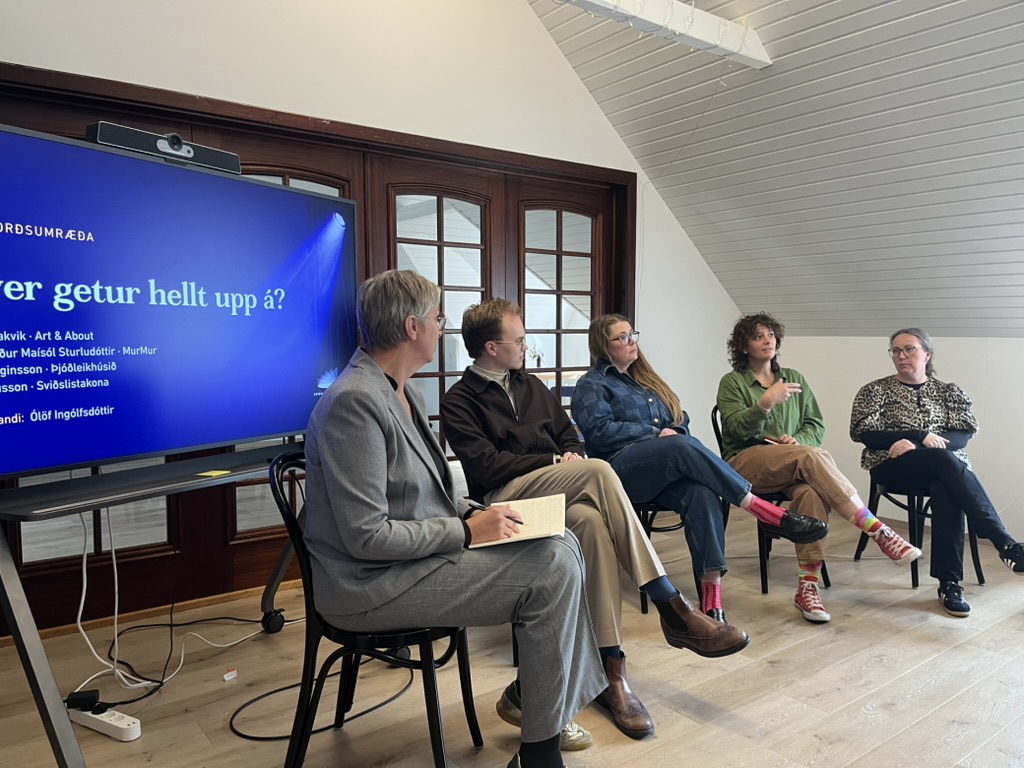
The panel discussion, moderated by Ólöf Ingólfsdóttir, brought together Sigrid, Ragnheiður Maísól Sturludóttir, Producer at MurMur, Máni Huginsson, Production Manager at the National Theatre of Iceland, and Aude Busson, a self-producing artist.
Maísól emphasised the importance of establishing how a team will work together from the outset. Clear contracts, responsibilities and agreed ways of communicating give artists the confidence to collaborate and explore ideas.
“How are we going to communicate? Who has what role?” she asked, noting that unclear responsibilities can cause friction when people find themselves doing work they do not consider theirs to do.
She also spoke about the value of having colleagues to turn to and share experiences with. This had been one of the main benefits of establishing MurMur. Producers themselves need time and space to develop their working methods, but finding that space is difficult when one project immediately follows another.
Safety and Wellbeing Are Part of Producing
Máni discussed the importance of safety and wellbeing in the performing arts. He described efforts to establish clearer procedures, stressing that change also needs to extend to workplace attitudes and habits.
He emphasised that people should be able to respond to illness and difficult personal circumstances without feeling that the show must always come first.
Aude explored the relationship between artists and audiences, and how a work develops through performance. A longer performance life can give artists a deeper understanding of their own work and inform their future practice. School partnerships, conversations and workshops can also enrich a production and connect it with more people.
“An artistic process is so personal and so filled with so many things. To be part of this, I think that’s quite the gift.”
— Aude Busson
The discussion also revealed different perspectives on a producer’s responsibility for securing funding. Maísól explained that producers want to be involved from the beginning, but that this can mean substantial unpaid work on applications and preparation, long before anyone knows whether a project will receive funding.
Bringing Producers In Earlier
Friðþjófur Þorsteinsson, lighting designer and founder of Showdeck, introduced the software he has been developing with his colleagues. It is designed to simplify the management of performing arts projects and preserve production information in one place. Participants then continued the day’s discussions in smaller groups.
The roundtable discussions emphasised the importance of involving producers while ideas are still taking shape. This allows funding, partnerships, audiences and touring plans to be considered alongside artistic development.
Ideas raised included:
- A practical producing handbook offering guidance and tools for artists and producers.
- Regular meetings for producers to exchange experience and knowledge.
- Closer collaboration between educational institutions and practitioners on teaching and practical training.
- Better support for remounting and touring productions, including the preservation of sets, costumes and production documentation.
Participants also discussed giving productions more time to build word of mouth and reach audiences. Planning further ahead could create more opportunities for performances beyond an initial run.
.png)
Continuing the Conversation in Practice
The following day, Saturday 12 September, Sigrid and Maísól led a practical workshop for producers and self-producing artists. Participants had the opportunity to explore producing in greater depth and apply the discussions to their own projects.


